
Close Encounters of the Scanned Kind…
Recently, I was fortunate enough to be invited by my colleague, Steve Klee, to contribute to a fascinating ongoing research project known as Alien Embodiment. Created alongside talented artists Luna and Will, the project delves into the complex world of negative body image, exploring how we perceive ourselves and, more importantly, how we can tackle and change those perceptions.
From May 18th to the 22nd, Luna and Will worked their artistic magic, crafting an array of "alien" sculptures out of everyday household items, arts and crafts materials, and sheer imagination.
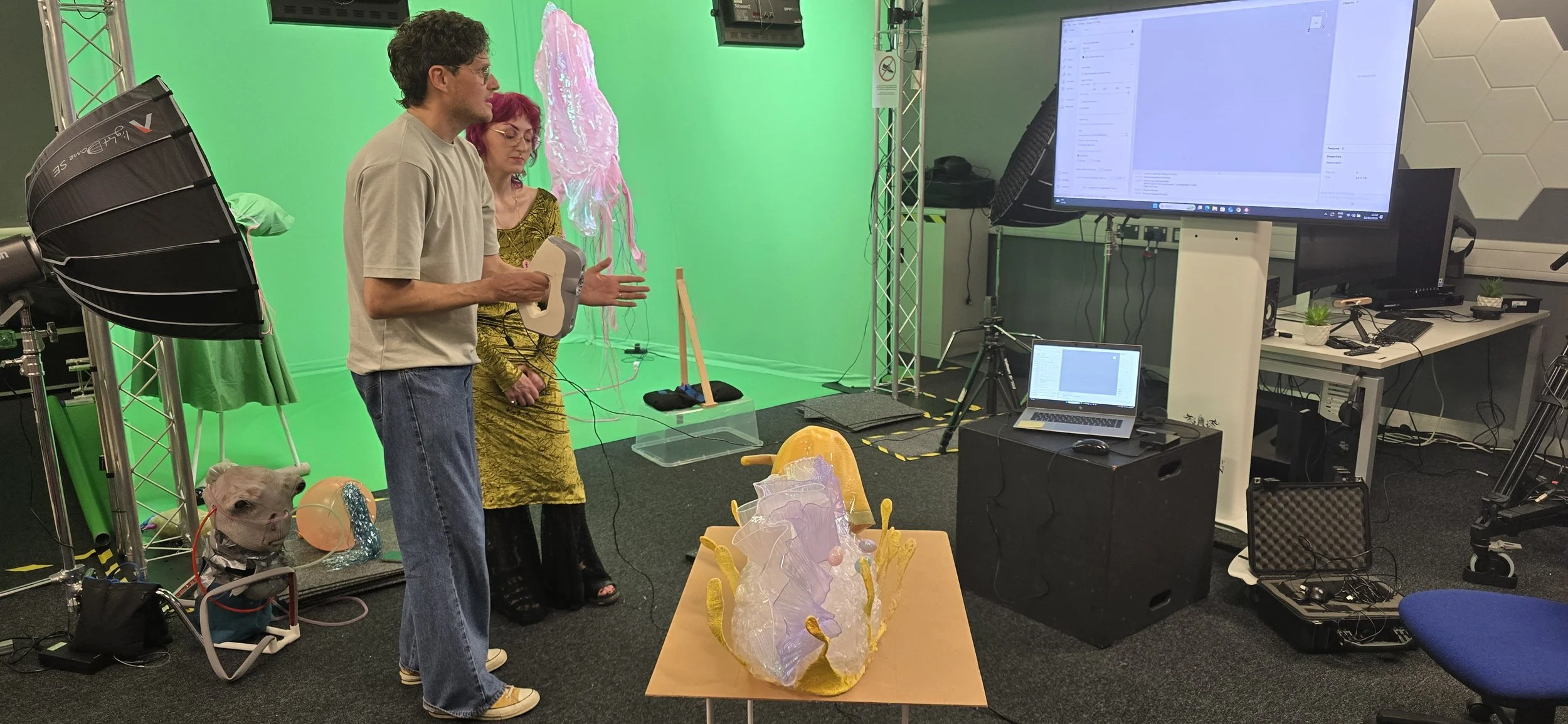
My mission was straightforward but highly technical: capture these physical sculptures in 3D space.
The Scanning Challenge: A Technical Nightmare (and a Dream Come True)
My role was to digitize these sculptures using a variety of tools and techniques. What really excited me was the sheer difficulty of the task.
If you've ever dabbled in 3D scanning, you know the unholy quartet of difficult materials: dark, reflective, semi-transparent, and incredibly thin. Naturally, these sculptures featured all of the above, combined with awkward shapes and varying scales. Each piece posed a unique hurdle.
Here is how I tackled the capture process:
Revopoint Inspire 2: I initially fired up my Revopoint Inspire 2 3D scanner. While it's a great piece of kit, it thrives on small-to-medium-sized objects. Getting a clean distance scan proved to be a hurdle due to the size of our workspace, potential cable hazards, and physical obstacles in the way.
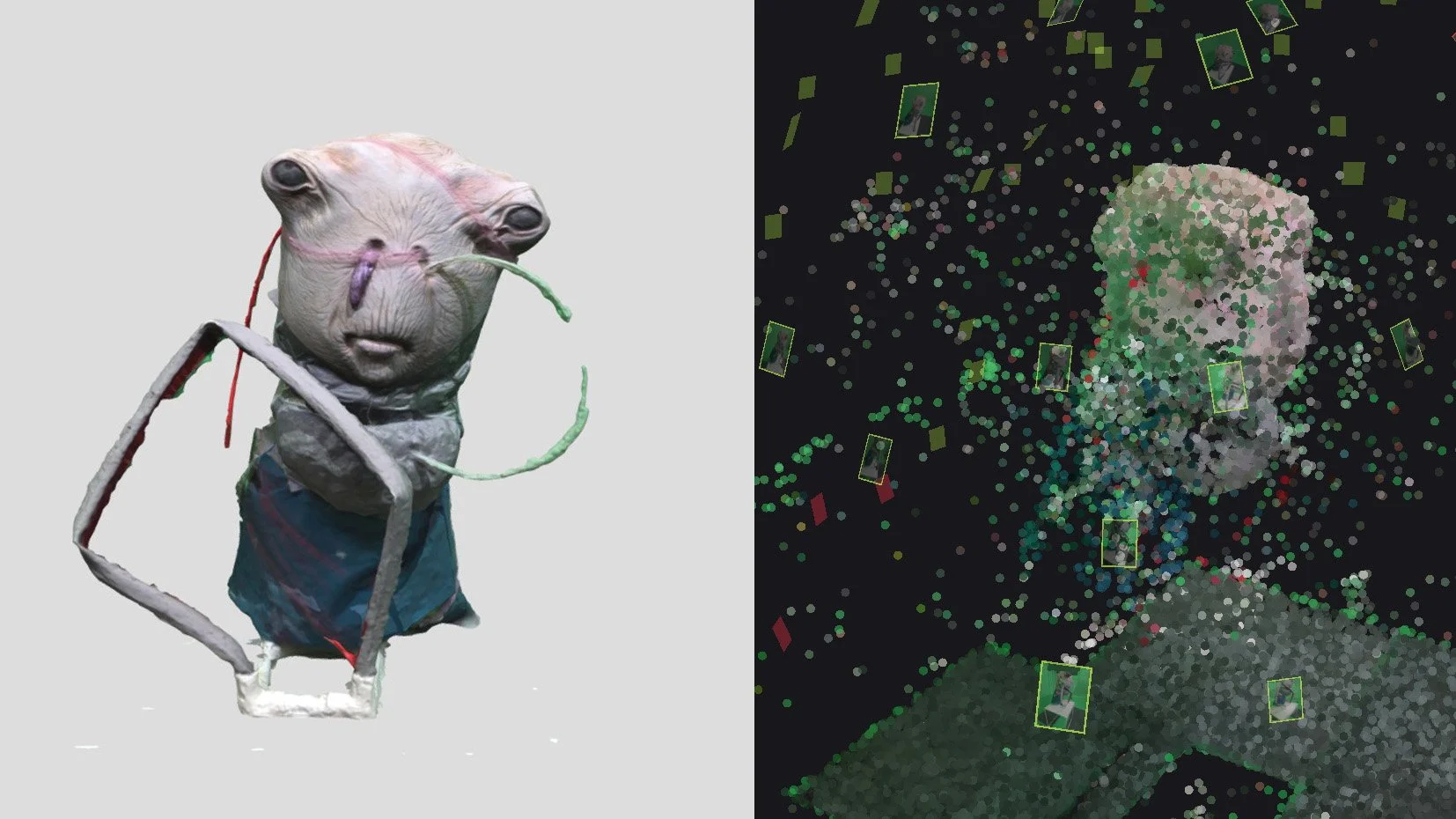
RealityScan (Photogrammetry): I quickly pivoted to photogrammetry. While it might not boast the microscopic accuracy of Laser, LiDAR, or structured-light scanners, it is far superior at capturing texture detail and completely bypasses the issues caused by transparent or shiny surfaces. Using Epic Games' RealityScan app, I carefully orbited each sculpture, taking photos at various heights and distances. I used the app's AR mode to build a "clean" capture orbit, identifying and filling in any gaps or disconnected areas on the fly.
Artec Eva: On Thursday, the immensely talented Kirsty Metcalf brought in the heavy artillery: the Artec Eva. She took the time to train us on the safe and proper operation of this fantastic, industry-grade equipment, which added a whole new level of professional polish to the project.
The Post-Processing Pipeline
Capturing the data is only half the battle. The next phase was wrangling the 3D models into a usable format—a process that came with its own set of unique quirks.
The main issue was that the raw scans lacked consistent scaling and default orientations. To fix this, I developed a specific workflow:
Initial Export: Sent the raw scans straight to Sketchfab.
Re-download & Re-orient: Downloaded the models and opened them in Windows 3D Builder to correct the scale and orientation (this step makes importing them into Blender much less of a headache).
Cleanup: Imported the re-oriented models into Blender (admittedly, my least favorite 3D modeling program, but a necessary evil here) to clean up the meshes.
Game Engine Integration: Re-exported the polished meshes into Unreal Engine.
Texturing: Took the UV JPG textures, converted them into materials, and successfully reapplied them to the meshes in Unreal.
What's Next?
The immediate next step is to hand all of these cleaned-up 3D models over to Steve Klee for him to use in the Alien Embodiment research as he sees fit.
As for me? I plan to document this entire workflow and turn it into a tutorial to help others navigating similar scanning hurdles. Beyond that, I want to take these alien sculptures, animate them, and drop them into surreal, digital landscapes in Unreal Engine. Why? Simply to broaden my skills, experiment, and see where the art takes me.