
Introduction
Acting the Part - Inhabit the role
The challenging part of motion capture for the performance artist is inhabiting a role that does not tangibly exist and understanding how the digital character behaves and reacts when the artist cannot see the character's proportions, physical attributes, and sometimes even the environment. Depending on the motion capture technology used, the performers need to also be aware of where to stand, how to move and the restrictions in place by the capture tools themselves.
Ultimately motion capture performers are actors, so the more they can become the character, the more believable the performance will become. It is up to the technical team, director and visual effects artists to direct the action, and the more help that can be given to the actor, be it via the use of props, padding or real-time mockup visuals, the better the capture data will be.
Motion capture actors often have to be very expressive, as micro-movements and actions are hard to carry across from motion capture alone.
Weight, Height and Movement
One of the hardest challenges for performance actors is conveying weight and heights that are not true to their own, as everyone walks and moves differently, be it the gait in their step, the historic injuries or habits that people collect; it is the role of a performance artist to be able to portray these and move with character and blend/hide within the role. We can assist this via the use of restrictive clothing, the addition of stilts, padding or other elements to limit motion and adjust flexibility and range of motion
Professional Motion capture actors tend to be trained in a movement-based discipline, be it dance, parkour, martial arts, etc. Actors can’t easily fake these skills, as motion capture data can reveal micro-movements that actors may not be aware of during the performance itself.
Performance artists need to have an awareness of movement through 3D space and the position of their limbs - this known as Proprioception.
Imagination and working in the void
As mentioned previously, motion artists rely heavily on direction and their own imagination as to what the result will look like, as whilst there are real-time capture overlay solutions out there, these tend to be fairly rough and still need adjustments and corrections before being used in high-end productions. The more the set and props can mimic the environment the artist will move through, the more accurate the performance, which is why platforms, rigs and weighted props are often used to aid in the capture process.
Professional capture stages are large spaces with an array of cameras and sensors to capture every element, as time is money. Performances will need to be repeated multiple times and can be draining on the performers and equipment alike.
Calibration Poses
Performance actors will typically be asked to start in a rest and calibration pose; this could be either an A or T pose, depending on the tool and requirements of the technical team. This makes it easier to calibrate key points on the human body, typically joints. Bipedal tracking is modelled on the average human structure so anything that does not follow this form requires adaptation and additional workflow.
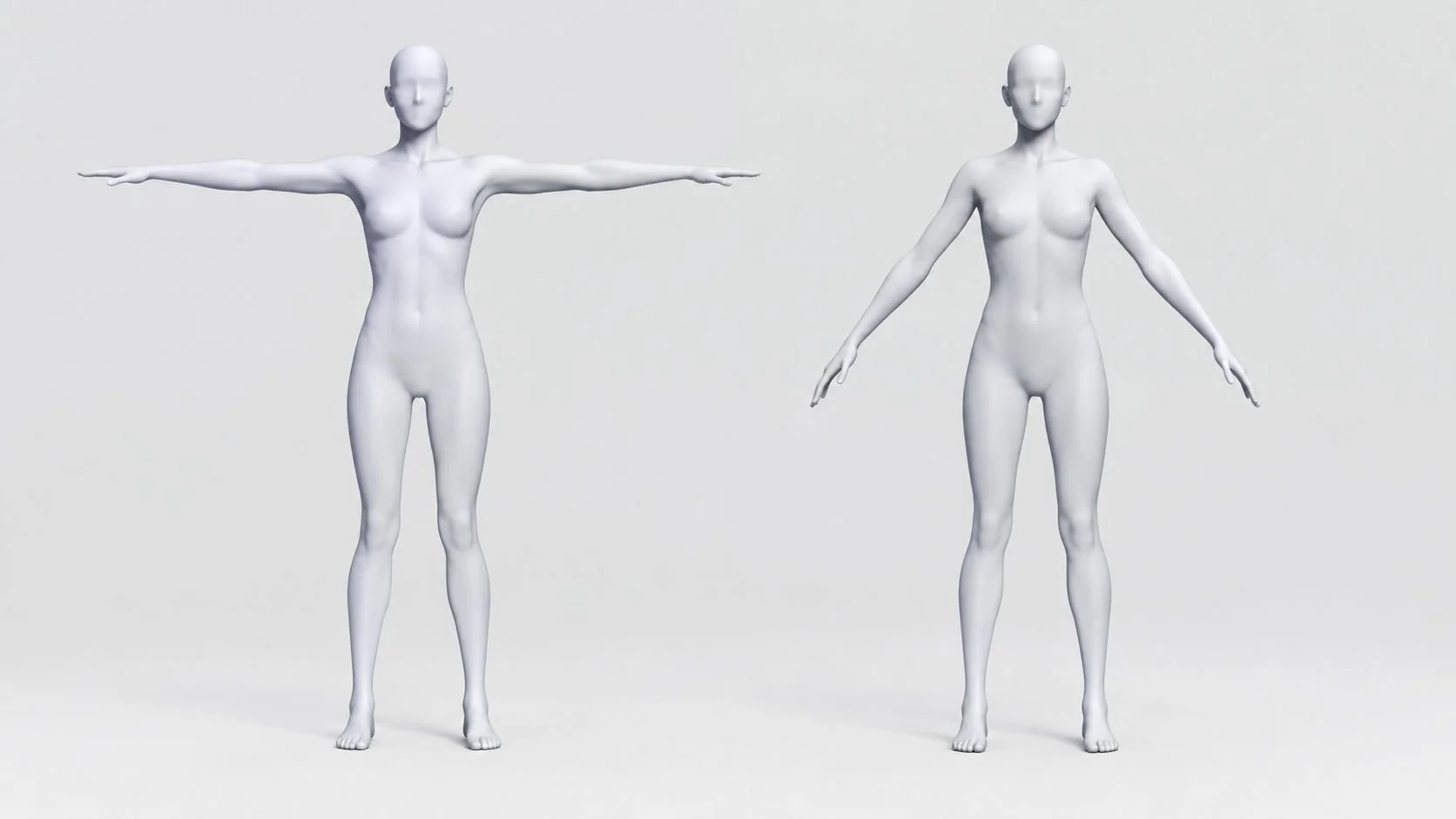
T-Pose
A T-pose features the character standing upright with their arms extended straight out to the sides, forming a capital letter "T" with the body.
Maximum symmetry: The arms are parallel to the ground and aligned strictly with the major axes.
Easy alignment: It is simpler for auto-riggers, game engines, and motion-capture calibration to read joint orientations.
Animation sharing: Ideal if you plan to transfer identical animation files across multiple different character rigs.
A-Pose
An A-pose has the character standing upright with their arms angled downward at about a 45-degree angle, forming an "A" shape relative to the torso.
Natural resting position: The arms sit closer to how a real person naturally holds their arms, reducing strain on the shoulders.
Better deformation: It preserves shoulder volume and reduces armpit collapsing or extreme texture stretching when the arms move.
Great for sculpting: Preferred by artists when drawing reference sheets or sculpting realistic human proportions.
Facial Capture
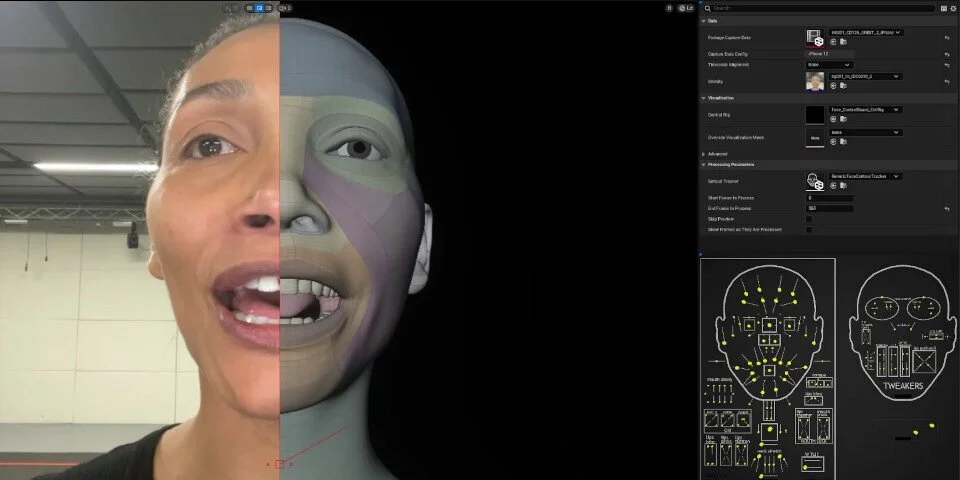
Facial capture works in a similar vein however on a much more micro scale as the face per area contains more micro muscular movements and tracking points to be followed as the face is the emotional soul of a characters feelings as such it can be tricky for actors to perform a role whilst being restricted or marked with various tracking points and devices strapped to their head which may impede their raw performance.
Facial capture is not always carried out at the same time as the body performance is captured and normally requires significantly more post capture cleanup.
Key take aways:
Performance capture is a time consuming process that requires practice and patience
No one tool or technology fits all
Support the performance by adding props, weights and visual cues to guide action and timings
Cleanups are required - build time into production for this